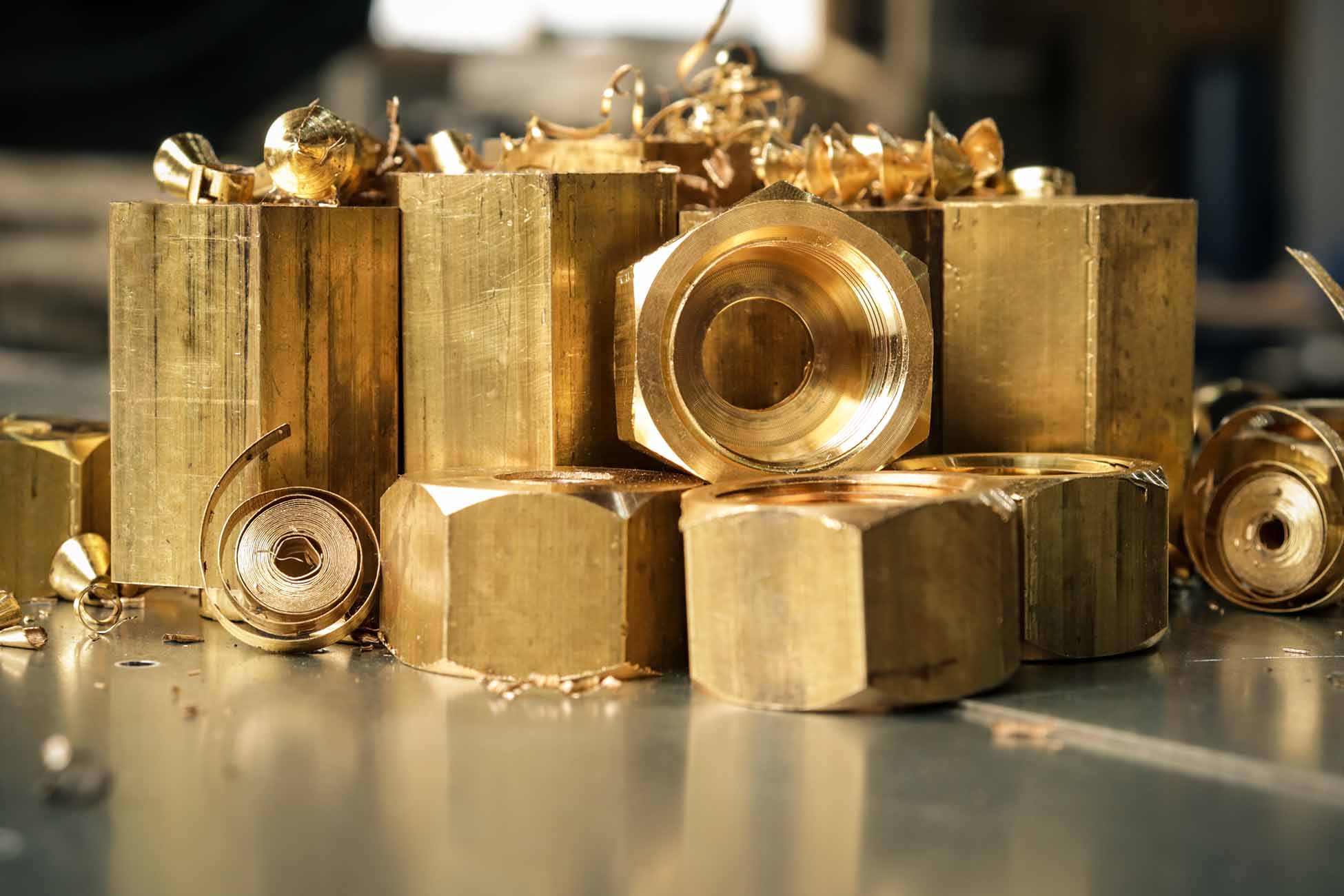
What sets brass apart from other metals is its friction—when it’s rubbed against other metals, it doesn’t spark. That’s why brass is perfect for making things that require low friction, like locks, gears, bearings, doorknobs, ammunition casings, and valves. The technique most often used to manufacture them is brass extrusion, and it’s one of the Federal Group’s specialties.
Extrusion is a simple process compared to other methods, such as injection molding and die casting services, which require more complex setups and precision. As a metalworking technique it’s much faster than older processes such as casting, which makes it a favorite for builders and artisans, and it produces excellent surface quality.
Brass extrusions are in high demand in the architecture and construction industries, especially, but they’re used across a wide range of other industries including electronics, data centers, automotive, telecommunications, industrial, agricultural, consumer, and marine.
Keep reading to learn what to look for in a brass extrusion manufacturer.
Brass is an alloy of copper and zinc. It’s a hardy metal capable of holding up well under pressure or extreme temperatures. It’s also an economical choice—it’s relatively easy and inexpensive to shape and form, with excellent machinability, meaning it can be rapidly and easily shaped.
It’s a common metal that is used in manufacturing items we all use in everyday life, such as doorknobs, drawer pulls, and handrails.